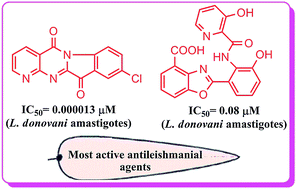
Antileishmanial refers to the range of medications and therapies used to combat leishmaniasis, an infection caused by Leishmania parasites. This disease is primarily transmitted to humans through the bite of infected female phlebotomine sandflies.
Leishmaniasis is a significant health issue worldwide, especially in tropical and subtropical areas, including regions of Asia, Africa, South America, and southern Europe. It can manifest in different ways, from mild skin conditions to severe organ damage. Globally, over one million new cases are reported each year.
Antileishmanial treatments are designed to either destroy the parasites directly or interfere with their ability to survive and multiply within the human body.
Different Forms of Leishmaniasis
Leishmaniasis presents in three major clinical forms, each affecting the body uniquely:
Cutaneous Leishmaniasis
- The most frequently occurring type.
- Leads to the development of skin ulcers that can vary in size and appearance.
- While some sores heal naturally, they often leave lasting scars.
Mucocutaneous Leishmaniasis
- Targets the mucous membranes of the nose, mouth, and throat.
- Commonly arises as a complication from cutaneous leishmaniasis.
- If untreated, it can result in severe facial disfigurement.
Visceral Leishmaniasis (Kala-azar)
- The most dangerous form of the disease.
- Involves critical internal organs such as the spleen, liver, and bone marrow.
- If not promptly treated, it can be fatal.
Factors Behind Drug Resistance
Similar to antibiotic resistance, incomplete or improper use of antileishmanial medications can lead to drug-resistant strains of Leishmania. Contributing factors include:
- Low-quality medications.
- Incorrect dosing or unfinished treatment regimens.
- Genetic mutations within the parasites that reduce drug effectiveness.
Drug resistance is an increasing problem, especially in areas with limited access to advanced treatment options.
Symptoms of Leishmaniasis
The symptoms of leishmaniasis depend on the type but commonly include:
- Long-lasting skin lesions or ulcers.
- Episodes of fever and chills.
- Significant weight loss.
- Enlargement of the spleen and liver (particularly in visceral cases).
- Nosebleeds and anemia.
- Breathing difficulties if the mucous membranes are involved.
Risk Factors for Infection
Several conditions can heighten the risk of contracting leishmaniasis, such as:
- Residing in or visiting regions where the disease is endemic.
- Poor living conditions and sanitation, which encourage sandfly breeding.
- Malnourishment.
- Compromised immune systems, notably in individuals with HIV/AIDS.
Treatment Strategies
Treatment plans for leishmaniasis are tailored based on:
- The type of leishmaniasis diagnosed (cutaneous, mucocutaneous, or visceral).
- The specific Leishmania species causing the infection.
- The geographic origin of the infection (due to varying drug resistances).
- The patient’s age, general health, and immune condition.
Available treatments include:
- Administration of antileishmanial drugs.
- Combination therapies to minimize resistance.
- Supportive care to address organ damage and other complications.
- Surgical interventions for severe mucocutaneous damage.
How to Prevent Leishmaniasis
Currently, there is no approved vaccine for leishmaniasis. Preventative measures focus on minimizing sandfly exposure and early detection:
- Applying insect repellents regularly.
- Using insecticide-treated bed nets while sleeping.
- Wearing long sleeves and pants to reduce skin exposure.
- Eliminating potential sandfly breeding sites around living areas.
- Prompt diagnosis and treatment to reduce transmission.
The list of some Antileishmanial medicine:
Impavido