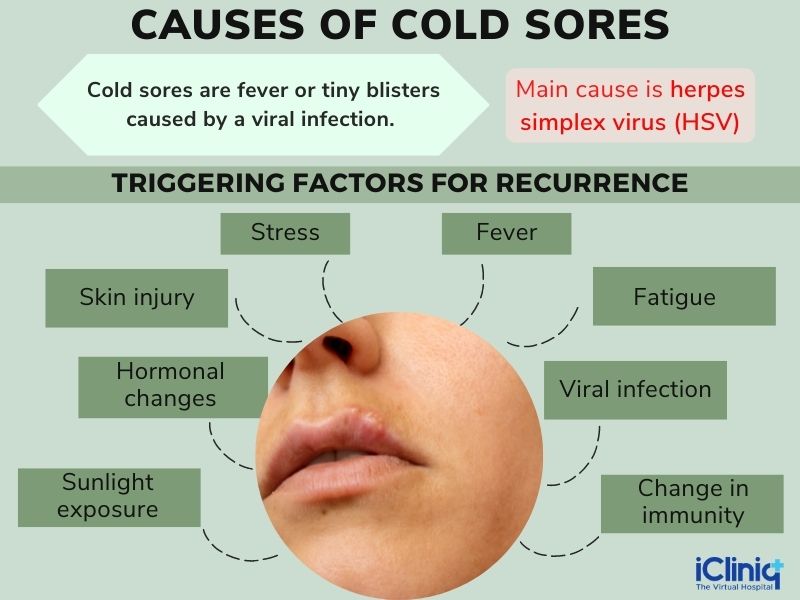
Cold sores, also known as fever blisters, are small, fluid-filled blisters that usually appear on or around the lips. They are not only painful but can also cause discomfort and embarrassment for many people. Cold sores are caused by the herpes simplex virus (HSV), most commonly HSV-1.
Although cold sores are very common, they can be bothersome. Knowing what triggers them and how to manage them can help reduce their frequency and severity.
What Causes Cold Sores?
Cold sores are caused primarily by an infection with the herpes simplex virus type 1 (HSV-1). In some cases, herpes simplex virus type 2 (HSV-2), usually associated with genital herpes, can also cause cold sores, especially through oral-genital contact.
Once the virus enters the body, it remains dormant in nerve cells and can reactivate later, often triggered by:
- Stress
- Illness (especially fever, hence the term “fever blisters”)
- Sun exposure
- Hormonal changes (such as during menstruation)
- Weakened immune system
- Trauma to the skin (like cuts or burns)
Symptoms of Cold Sores
Cold sores typically develop in stages:
- Tingling and itching: Many people feel a burning or tingling sensation around the lips before a sore appears.
- Blistering: Small fluid-filled blisters appear, usually clustered together.
- Oozing and crusting: The blisters may burst, releasing fluid, then crust over and heal.
Other possible symptoms include:
- Swelling around the affected area
- Pain or soreness at the site
- Mild fever
- Swollen lymph nodes in severe cases
Cold sores usually heal within 7 to 10 days without leaving a scar.
How Cold Sores Spread
Cold sores are highly contagious. The virus can spread through:
- Kissing
- Sharing utensils, lip balm, or razors
- Direct contact with the infected area
Cold sores are most contagious when the blisters are open and oozing, but the virus can still spread even when sores are not visible.
Treatment Options
While cold sores generally resolve on their own, several treatments can help speed healing and reduce discomfort:
Antiviral Medications
- Prescription antivirals like acyclovir, valacyclovir, and famciclovir can shorten the duration of an outbreak if taken early.
- Topical antiviral creams can also help reduce symptoms if applied promptly.
Over-the-Counter Treatments
- Creams and ointments with ingredients like docosanol can lessen healing time.
- Pain-relieving gels may ease discomfort.
Home Remedies
- Applying a cool compress to the sore can reduce redness and swelling.
- Keeping the area moisturized with a lip balm or petroleum jelly helps prevent cracking.
It’s important to avoid picking at cold sores, as this can lead to secondary bacterial infections or spread the virus to other parts of the body.
Prevention Tips
Although it’s difficult to completely prevent cold sores, you can reduce the risk of outbreaks by:
- Managing stress effectively
- Using sunscreen on your lips
- Avoiding direct contact with infected individuals
- Not sharing personal items like towels, lipsticks, or eating utensils
- Maintaining a strong immune system through a healthy lifestyle
If you experience frequent or severe cold sores, a doctor may recommend daily antiviral medication to help suppress outbreaks.
Final Thoughts
Cold sores are a common viral infection that can cause discomfort and emotional distress. Fortunately, with prompt treatment and good preventive habits, outbreaks can be managed effectively. If you find that cold sores occur often or don’t heal properly, it’s a good idea to seek medical advice for further evaluation and treatment options.
The list of some Cold Sores medicine:
Asiviral