Von Hippel-Lindau (VHL) disease is a rare, inherited disorder that increases the risk of developing tumors and cysts in multiple organs. Though many of these growths are benign (non-cancerous), some can become malignant or cause serious complications if not detected and managed in time. Early awareness and regular monitoring are key to living well with this condition.
Von Hippel-Lindau disease is a genetic disorder caused by a mutation in the VHL gene, a tumor suppressor gene responsible for controlling abnormal cell growth. When this gene is mutated, it can no longer regulate cell division effectively, leading to the formation of tumors and cysts throughout the body.
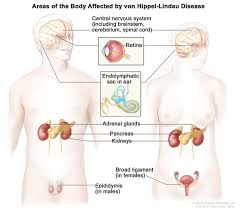
These growths can occur in the brain, spinal cord, eyes, kidneys, pancreas, adrenal glands, and more. The tumors are typically vascular, meaning they contain many blood vessels, and can affect organ function depending on their size and location.
How Is VHL Inherited?
VHL is passed down in an autosomal dominant pattern, meaning a person only needs to inherit one copy of the mutated gene from either parent to develop the condition. However, about 20% of cases arise from a new mutation, with no prior family history.
If one parent has VHL, there is a 50% chance of passing it on to each child.
Common Tumors and Cysts Associated with VHL
People with VHL may develop one or more of the following:
- Hemangioblastomas: Benign tumors of the brain, spinal cord, or retina. They can cause headaches, vision loss, or problems with balance and coordination.
- Renal cell carcinoma (RCC): A type of kidney cancer. Regular screening is vital as these tumors can be life-threatening if undetected.
- Pheochromocytomas: Tumors of the adrenal glands that can produce excess adrenaline, causing high blood pressure, anxiety, and palpitations.
- Pancreatic cysts and tumors: These are often benign but should be monitored to ensure they don’t affect pancreatic function or become malignant.
- Endolymphatic sac tumors: Rare tumors in the inner ear that can lead to hearing loss or balance issues.
Symptoms of VHL
Symptoms vary widely depending on the organs involved. Some people may not experience symptoms for many years, while others might notice issues in childhood or early adulthood. Common signs include:
- Headaches
- Vision problems
- Hearing loss or ringing in the ears
- High blood pressure
- Abdominal pain
- Blood in the urine
Because the condition can affect multiple systems, symptoms often emerge gradually and can be mistaken for unrelated health issues.
How Is VHL Diagnosed?
Diagnosis is typically based on:
- Family History: A known diagnosis in a close relative raises suspicion.
- Clinical Evaluation: A history of multiple tumors in VHL-associated organs prompts further testing.
- Genetic Testing: Identifying a mutation in the VHL gene confirms the diagnosis.
People with a VHL diagnosis or a family history should undergo regular screening even if they are asymptomatic, to detect issues early.
Treatment and Management
There is currently no cure for VHL, but regular monitoring and early treatment of tumors can prevent serious complications.
- Surgical removal of tumors is common when they grow large or cause symptoms.
- Laser therapy may be used for eye tumors to preserve vision.
- Medications like targeted therapies are being explored for some VHL-associated cancers.
- Regular screenings (MRI, eye exams, blood tests, and ultrasounds) are essential to track tumor development.
A team of specialists—such as neurologists, oncologists, nephrologists, and genetic counselors—usually manages care for VHL patients.
Living with Von Hippel-Lindau Disease
Although living with VHL can be challenging, early detection, proactive care, and support networks can dramatically improve quality of life. Genetic counseling is highly recommended for affected individuals and family members, especially those planning to have children.
Joining patient organizations and advocacy groups can also provide emotional support and access to the latest research and treatment options.
Conclusion
Von Hippel-Lindau disease is a complex but manageable genetic condition. With advancements in medical imaging, genetics, and targeted therapies, individuals with VHL are living longer and healthier lives than ever before. Awareness, vigilance, and a comprehensive healthcare plan can make all the difference in effectively navigating this rare disorder.
The list of Von Hippel-Lindau Disease medicine:
Lucibelzu
Welidx