Alzheimer’s disease is a progressive brain disorder that gradually destroys memory, thinking skills, and the ability to carry out simple tasks. It is the most common cause of dementia, a general term for memory loss and cognitive decline that interferes with daily life.
Named after Dr. Alois Alzheimer, who first described the disease in 1906, Alzheimer’s is a major public health issue affecting millions worldwide, especially older adults.
What Happens in Alzheimer’s Disease?
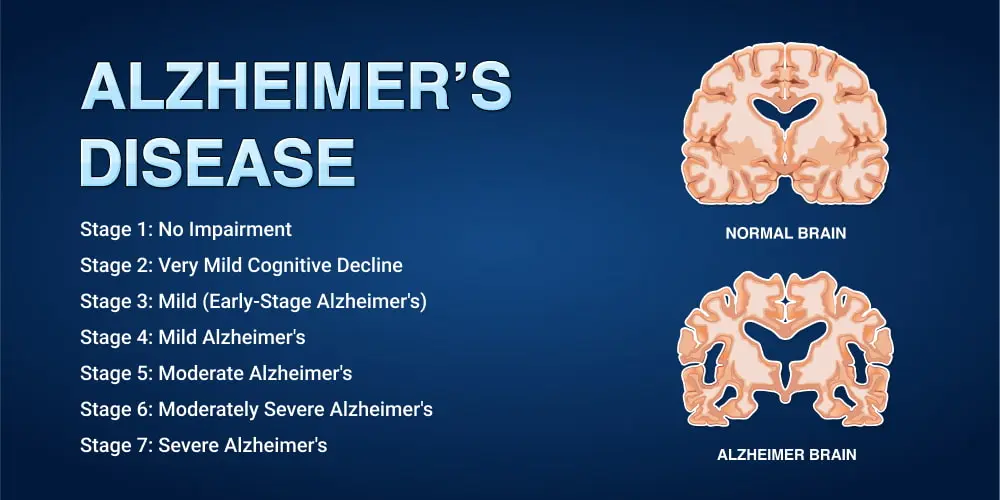
In Alzheimer’s, abnormal protein deposits form plaques and tangles in the brain. These disrupt communication between nerve cells and cause them to die. Over time, brain tissue shrinks significantly, especially in areas involved in memory and judgment.
The exact cause of these changes is not fully understood, but a combination of genetic, lifestyle, and environmental factors are believed to play a role.
Symptoms of Alzheimer’s Disease
Alzheimer’s symptoms usually develop slowly and worsen over time. Early signs can be subtle but gradually become more serious. Common symptoms include:
- Memory loss that disrupts daily activities
- Difficulty solving problems or planning tasks
- Confusion about time or place
- Trouble understanding visual images and spatial relationships
- Problems with words in speaking or writing
- Misplacing things and inability to retrace steps
- Poor judgment or decision-making
- Withdrawal from work or social activities
- Changes in mood or personality, including depression, anxiety, and suspicion
In the later stages, individuals may lose the ability to carry on a conversation, recognize loved ones, or control movement.
Risk Factors
Several factors can increase the likelihood of developing Alzheimer’s, including:
- Age: Risk rises significantly after age 65.
- Family history: Having a parent or sibling with Alzheimer’s increases risk.
- Genetics: Certain genes, like the APOE-e4 gene, are linked to higher risk.
- Lifestyle factors: Poor heart health, smoking, obesity, and lack of exercise may contribute.
- Head injuries: A history of serious head trauma could raise the risk.
- Cognitive inactivity: Less engagement in mentally stimulating activities may be a factor.
Diagnosis
There is no single test to diagnose Alzheimer’s. Doctors use a combination of medical history, mental status testing, physical and neurological exams, and brain imaging (such as MRI or CT scans) to reach a diagnosis. In some cases, biomarkers from cerebrospinal fluid or PET scans may help identify the disease earlier.
Early diagnosis is important because it allows individuals and their families to plan for the future and explore treatment options that may help manage symptoms.
Treatment Options
Currently, there is no cure for Alzheimer’s, but certain treatments can help slow the progression of symptoms and improve quality of life.
- Medications: Drugs like donepezil, rivastigmine, and memantine can temporarily ease symptoms related to memory and cognition.
- Therapies: Cognitive stimulation therapy, occupational therapy, and lifestyle changes (such as a healthy diet and exercise) can also provide benefits.
- Supportive care: Creating a safe environment, establishing routines, and providing emotional support are critical for managing the disease.
Research is ongoing, and new treatments, including drugs that target the underlying biological processes, are being explored.
Prevention and Healthy Living
While Alzheimer’s can’t be fully prevented, certain lifestyle changes may reduce the risk:
- Stay physically active with regular exercise.
- Eat a balanced diet, such as the Mediterranean or DASH diets.
- Stay mentally engaged through reading, puzzles, and learning new skills.
- Maintain social connections to avoid isolation.
- Manage heart health, including controlling blood pressure, cholesterol, and diabetes.
Living with Alzheimer’s
Receiving an Alzheimer’s diagnosis can be overwhelming, but support is available. Many people with early-stage Alzheimer’s continue to live independently and stay active. Caregivers play a crucial role and should also seek support for their own well-being.
Community resources, support groups, counseling, and educational programs can make a big difference for both patients and their families.
Final Thoughts
Alzheimer’s disease profoundly impacts individuals, families, and communities. While the search for a cure continues, early detection, proper care, and a healthy lifestyle offer hope for better outcomes. Raising awareness and supporting ongoing research are key steps in the fight against Alzheimer’s.
The list of some Alzheimer medicine:
Aricept
Dozyl