The human heart typically beats in a steady, organized rhythm. But for millions around the world, that rhythm can become chaotic. This condition is known as atrial fibrillation, or AFib—a type of arrhythmia that causes the heart to beat irregularly and often rapidly. While AFib may seem harmless at first glance, if left unmanaged, it can lead to serious health problems such as stroke or heart failure.
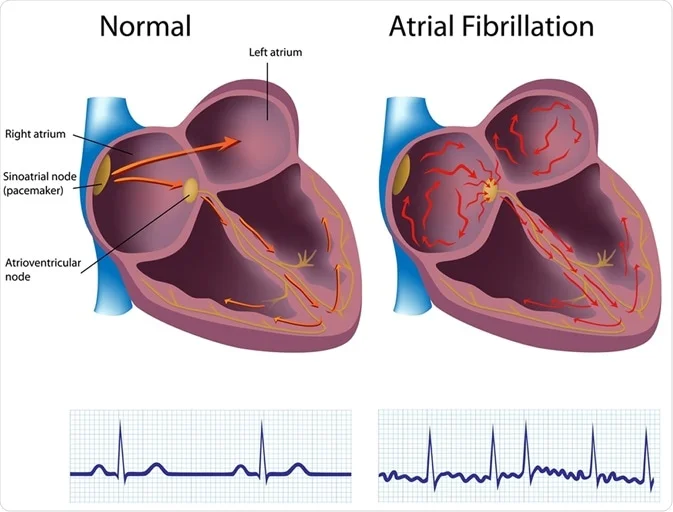
Atrial fibrillation occurs when the heart’s upper chambers (the atria) experience chaotic electrical signals. Instead of contracting in a regular rhythm, the atria quiver or “fibrillate.” This leads to a fast and irregular heartbeat that can cause blood to pool in the heart, raising the risk of clot formation.
Normally, the heart’s electrical system controls a consistent beat—about 60 to 100 times per minute when at rest. In AFib, the heartbeat can skyrocket to 100-175 beats per minute and becomes disorganized.
What Causes Atrial Fibrillation?
AFib can develop for many reasons, including:
- High blood pressure – One of the most common causes.
- Heart conditions – Including coronary artery disease, heart valve disorders, or a history of heart surgery.
- Thyroid disorders – Especially overactive thyroid (hyperthyroidism).
- Excessive alcohol consumption – Often referred to as “holiday heart syndrome.”
- Sleep apnea – Disruptions in breathing during sleep can stress the heart.
- Age – The risk increases with age, especially after 60.
- Other chronic illnesses – Such as diabetes, lung disease, or infections.
Sometimes, atrial fibrillation occurs without any identifiable cause, a condition known as lone AFib.
Symptoms of Atrial Fibrillation
Atrial fibrillation can be silent—some people may have no symptoms at all. However, common signs and symptoms include:
- Heart palpitations (a fluttering or racing heartbeat)
- Shortness of breath
- Fatigue or weakness
- Dizziness or lightheadedness
- Chest discomfort or pain
- Reduced ability to exercise
The unpredictability of these symptoms can make AFib feel especially unsettling.
Why Is Atrial Fibrillation Dangerous?
AFib doesn’t just make your heart race—it can lead to serious complications, particularly:
- Stroke: When blood pools in the atria, clots can form. If a clot travels to the brain, it can cause a stroke. In fact, AFib increases stroke risk by five times.
- Heart Failure: The heart’s irregular pumping can weaken it over time.
- Chronic Fatigue: Due to inefficient circulation and oxygen delivery.
- Cognitive Issues: Long-term AFib may be linked to memory problems and dementia.
How Is Atrial Fibrillation Diagnosed?
Diagnosis usually starts with a physical examination and review of symptoms. Common tests include:
- Electrocardiogram (ECG or EKG) – The primary tool to detect AFib.
- Holter Monitor – A portable device that records heart rhythms over 24–48 hours.
- Echocardiogram – An ultrasound to examine heart structure and function.
- Blood tests – To rule out thyroid problems or other underlying issues.
- Event monitor – For infrequent episodes, worn for several weeks.
Treatment Options for Atrial Fibrillation
Treatment goals include controlling heart rate, restoring normal rhythm, and preventing clots. Options may include:
1. Medications
- Rate Control Drugs: Help slow the heart rate (e.g., beta-blockers, calcium channel blockers).
- Rhythm Control Drugs: Help restore and maintain a normal rhythm (antiarrhythmic drugs).
- Blood Thinners: Such as warfarin or newer oral anticoagulants (NOACs) to prevent strokes.
2. Cardioversion
- A controlled electric shock delivered to the chest to reset the heart rhythm.
3. Catheter Ablation
- A minimally invasive procedure that targets and destroys areas of heart tissue causing erratic signals.
4. Lifestyle Changes
- Managing blood pressure and cholesterol
- Quitting smoking and limiting alcohol
- Maintaining a healthy weight
- Treating sleep apnea
5. Surgical Options
- In some cases, procedures like the Maze surgery or left atrial appendage closure may be recommended.
Living with Atrial Fibrillation
A diagnosis of atrial fibrillation can be overwhelming, but with proper care and lifestyle adjustments, many people live full, active lives. Managing AFib often requires regular medical follow-ups and adherence to prescribed treatments.
Monitoring your pulse, understanding triggers, and staying informed are all part of successful long-term management.
Conclusion
Atrial fibrillation is more than just an irregular heartbeat—it’s a serious condition that can have lasting effects if not properly addressed. However, with early detection, appropriate treatment, and proactive health choices, individuals with AFib can significantly reduce their risks and maintain good quality of life.
The list of some Atrial Fibrillation medicine:
Sotalex