Herpes infections are common worldwide and are caused by different strains of the herpes virus. Each type of herpes affects the body differently, leading to a variety of symptoms and requiring specific management approaches. Here, we’ll dive into three major forms: Genital Herpes, Herpes Labialis, and Herpes Zoster.
What is Genital Herpes?
Genital herpes is a sexually transmitted infection (STI) caused mainly by the herpes simplex virus type 2 (HSV-2), although herpes simplex virus type 1 (HSV-1) can also cause it. The virus spreads through direct skin-to-skin contact, usually during vaginal, anal, or oral sex.
Once infected, the virus remains in the body in an inactive form and can reactivate periodically, causing recurrent outbreaks.
Symptoms of Genital Herpes
- Painful blisters or sores around the genital or anal area
- Itching or burning sensations before sores appear
- Flu-like symptoms such as fever, swollen lymph nodes, and body aches
- Pain during urination if sores are present near the urethra
Some people may have mild symptoms or none at all, making it easy to unknowingly pass the virus to others.
Risk Factors
- Multiple sexual partners
- Unprotected sex
- Weakened immune system
- Having another sexually transmitted infection
Treatment
Although there is no cure for genital herpes, antiviral medications like acyclovir, valacyclovir, and famciclovir can help control outbreaks, reduce the severity of symptoms, and lower the risk of transmission.
What is Herpes Labialis?
Herpes labialis, commonly known as cold sores or fever blisters, is caused mainly by herpes simplex virus type 1 (HSV-1). It typically affects the lips and surrounding areas of the mouth.
After the initial infection, the virus stays dormant in nerve tissues and may reactivate later, often triggered by stress, illness, or sun exposure.
Symptoms of Herpes Labialis
- Tingling, itching, or burning sensations around the lips
- Small, fluid-filled blisters that eventually break and crust over
- Mild fever, swollen lymph nodes, or sore throat during the first outbreak
Triggers for Recurrence
- Stress or fatigue
- Exposure to sunlight or wind
- Hormonal changes, like menstruation
- Illness or fever
Treatment
Cold sores usually heal on their own within a couple of weeks. However, antiviral creams or oral medications can speed up recovery and reduce discomfort. Regular use of sunscreen on the lips can also help prevent outbreaks triggered by sun exposure.
What is Herpes Zoster?
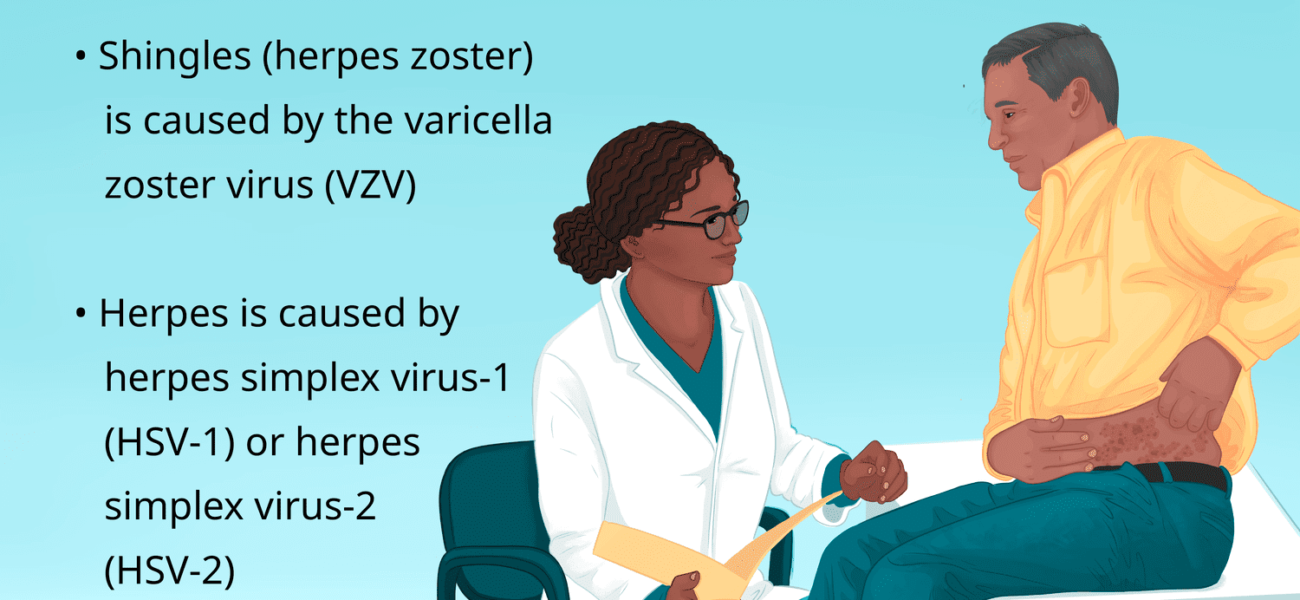
Herpes zoster, more widely known as shingles, is caused by the varicella-zoster virus — the same virus responsible for chickenpox. After a person recovers from chickenpox, the virus stays inactive in the nerve tissue and can reactivate years later as shingles.
Symptoms of Herpes Zoster
- Pain, burning, or tingling in a specific area on one side of the body
- Red rash that appears a few days after the pain
- Fluid-filled blisters that scab over in 7 to 10 days
- Fever, headache, or sensitivity to light
The rash typically follows a nerve pathway and is usually limited to one side of the body or face.
Risk Factors
- Older age (especially over 50)
- Weakened immune system
- Stress
- Previous history of chickenpox
Treatment
Early treatment with antiviral drugs like acyclovir, valacyclovir, or famciclovir can help shorten the duration of symptoms and reduce the risk of complications, such as postherpetic neuralgia — a condition where pain persists long after the rash disappears.
There are also vaccines, like Shingrix, available to help prevent shingles, especially in older adults.
Key Takeaways
While genital herpes, herpes labialis, and herpes zoster are all caused by members of the herpes virus family, they affect the body differently.
- Genital herpes typically spreads through sexual contact.
- Herpes labialis usually presents as cold sores around the mouth.
- Herpes zoster results from the reactivation of the chickenpox virus later in life.
Early diagnosis, proper treatment, and preventive measures can greatly improve quality of life and reduce the risk of spreading these infections.
The list of some Genital Herpes medicine: