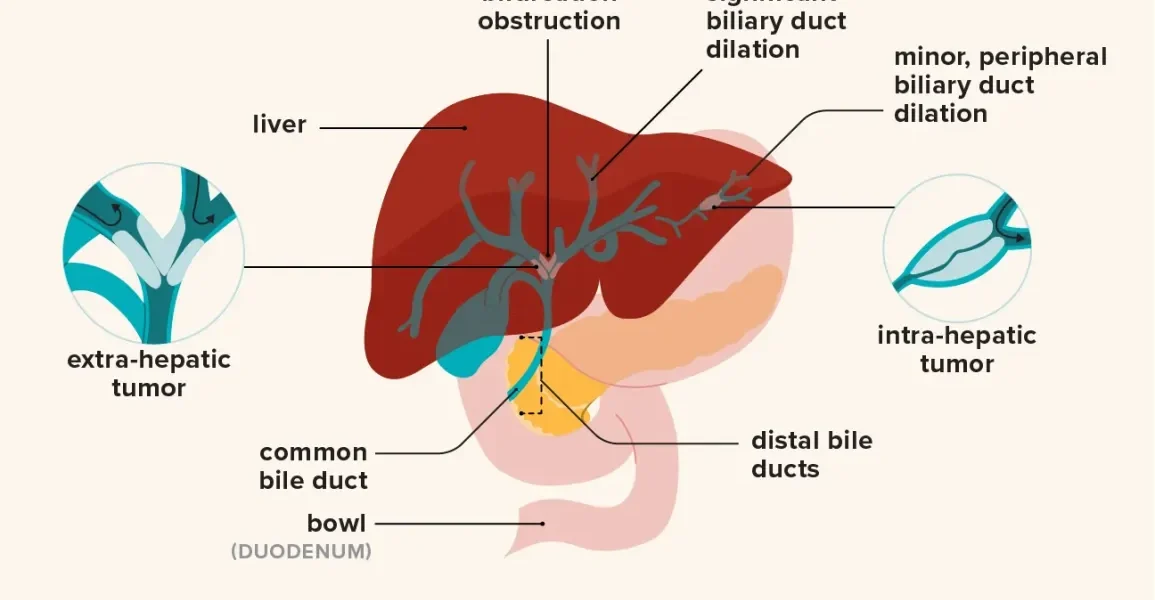
Bile duct cancer, also known as cholangiocarcinoma, is a rare and aggressive form of cancer that begins in the bile ducts—thin tubes that carry bile from the liver and gallbladder to the small intestine. Though uncommon, this cancer can be life-threatening and is often diagnosed at an advanced stage due to its subtle early symptoms.
Understanding the risk factors, symptoms, and treatment options can aid in early detection and improve the chances of successful management.
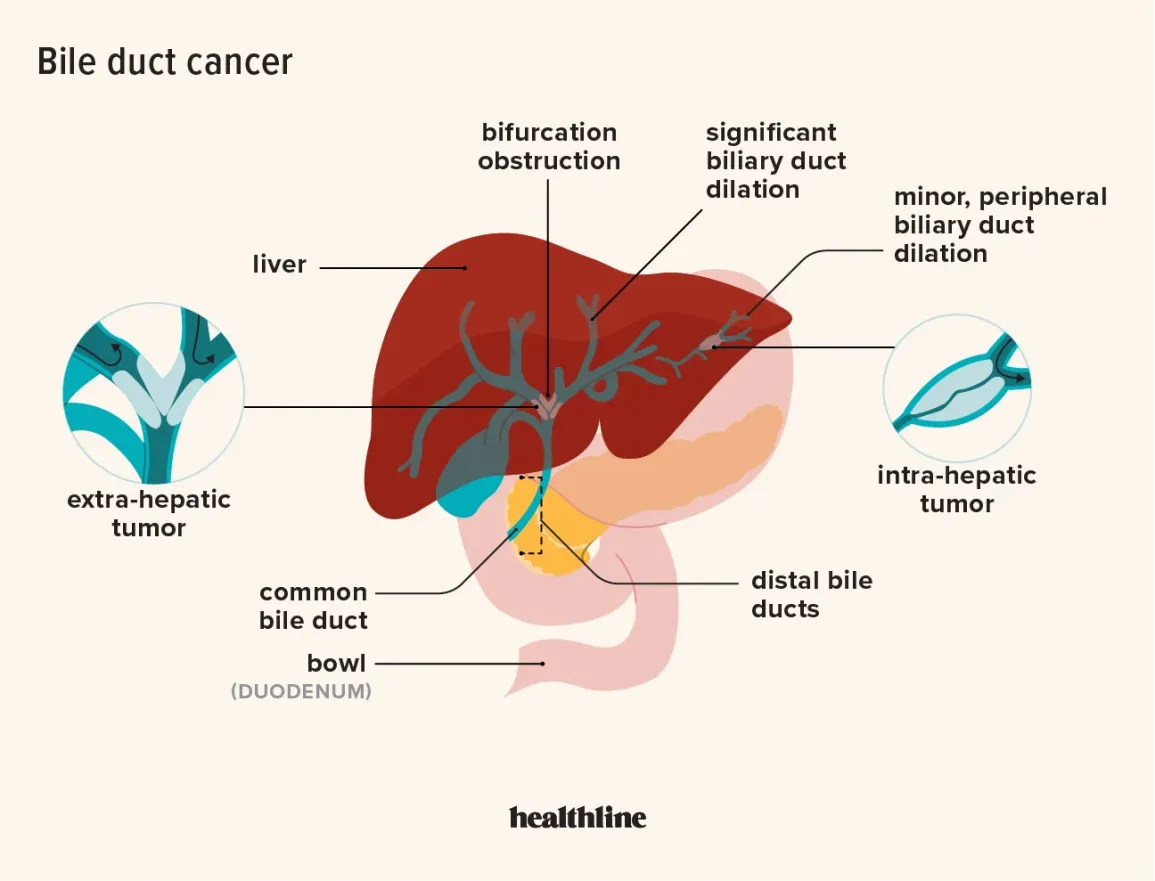
Bile duct cancer occurs when abnormal cells grow uncontrollably in any part of the bile duct system. There are three main types, based on the location of the tumor:
- Intrahepatic cholangiocarcinoma: Found in the bile ducts within the liver.
- Perihilar (hilar) cholangiocarcinoma: Occurs at the junction where the right and left bile ducts exit the liver.
- Distal cholangiocarcinoma: Develops in the bile ducts closer to the small intestine.
Each type presents its own diagnostic and treatment challenges.
Causes and Risk Factors
While the exact cause of bile duct cancer is not always clear, certain risk factors are known to increase the likelihood of developing the disease:
- Primary sclerosing cholangitis (PSC): A chronic liver disease that causes scarring and inflammation of the bile ducts.
- Bile duct abnormalities: Such as choledochal cysts or Caroli’s disease.
- Chronic liver disease: Including cirrhosis and chronic hepatitis B or C infection.
- Parasitic infections: Liver flukes, common in parts of Asia, have been linked to bile duct cancer.
- Age and lifestyle: Most cases occur in people over the age of 50, and risk may be increased by smoking or heavy alcohol use.
Signs and Symptoms
In the early stages, bile duct cancer may not cause noticeable symptoms. As the tumor grows, it may lead to:
- Jaundice (yellowing of the skin and eyes)
- Dark urine and pale stools
- Abdominal pain, especially in the upper right side
- Unexplained weight loss
- Itching
- Fever
- Loss of appetite
These symptoms are often mistaken for other liver or digestive disorders, which can delay diagnosis.
How is Bile Duct Cancer Diagnosed?
Diagnosing bile duct cancer typically involves a combination of tests and imaging techniques:
- Blood tests: To check liver function and look for tumor markers like CA 19-9.
- Ultrasound, CT scan, or MRI: To visualize tumors and assess the extent of disease.
- Endoscopic retrograde cholangiopancreatography (ERCP) or MRCP: Specialized imaging to examine the bile ducts.
- Biopsy: A sample of tissue is collected and examined under a microscope to confirm the presence of cancer cells.
Treatment Options
Treatment depends on the location and stage of the cancer, as well as the patient’s overall health. Common treatments include:
Surgery
- If the cancer is localized and operable, surgical removal of the affected bile duct and surrounding tissue may offer the best chance for a cure.
Liver Transplant
- In selected cases of early-stage bile duct cancer, a liver transplant may be considered, especially when combined with chemotherapy or radiation.
Radiation Therapy
- Used to shrink tumors or relieve symptoms, especially when surgery is not possible.
Chemotherapy
- Can be used before or after surgery, or as a palliative treatment for advanced cases.
Targeted Therapy and Immunotherapy
- Newer treatments are being studied that aim to attack specific cancer cells or enhance the immune system’s ability to fight the disease.
Prognosis and Outlook
The prognosis for bile duct cancer depends on the stage at which it is diagnosed. When caught early and treated aggressively, some patients experience long-term survival. However, because it is often found late, the overall survival rate remains low. Ongoing research and clinical trials are offering new hope for better treatments in the future.
Prevention and Awareness
While not all cases can be prevented, the following steps may help reduce the risk:
- Treat chronic liver conditions early
- Avoid exposure to liver flukes by practicing food safety in high-risk areas
- Quit smoking and limit alcohol use
- Regular check-ups if you have liver disease or bile duct abnormalities
Conclusion
Bile duct cancer is a challenging diagnosis, but increased awareness, early detection, and advances in treatment are providing hope. As with many cancers, being informed and proactive about your health is key. If you experience persistent symptoms related to digestion or jaundice, seek medical advice without delay.
The list of some Bile duct cancer medicine:
Pemitinib
Peminib
Pemidx
LuciPem