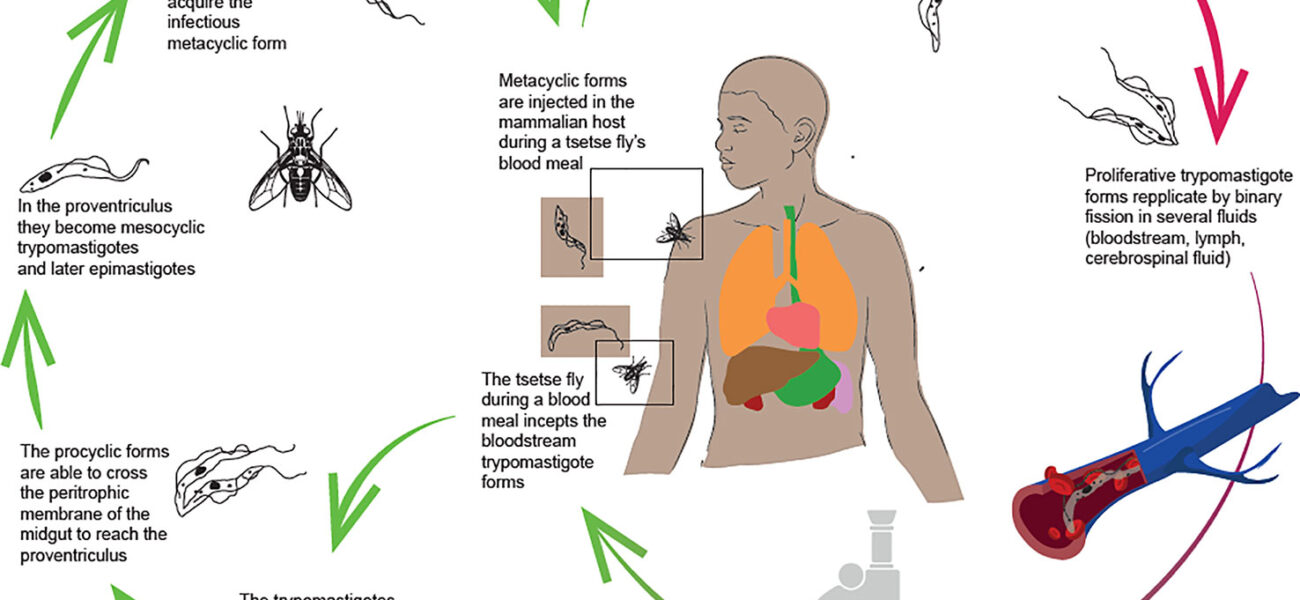
In the vast spectrum of infectious diseases that affect both humans and animals, Trypanosomiasis stands out as a particularly insidious illness, often underrepresented in global health discussions. Also known as sleeping sickness in humans and nagana in animals, this parasitic disease is caused by protozoa of the genus Trypanosoma, transmitted primarily by the tsetse fly in sub-Saharan Africa and other biting insects in the Americas.
Trypanosomiasis is a parasitic disease caused by different species of Trypanosoma. The two main forms affecting humans are:
- African Trypanosomiasis (Sleeping Sickness): Caused by Trypanosoma brucei subspecies (T. b. gambiense and T. b. rhodesiense), this disease is endemic in sub-Saharan Africa.
- American Trypanosomiasis (Chagas Disease): Caused by Trypanosoma cruzi, and found mostly in Latin America, this disease is transmitted by triatomine bugs, also known as “kissing bugs.”
While these diseases share the same genus, their progression, transmission, and impact vary significantly.
Transmission and Risk Factors
In Africa, the tsetse fly acts as a vector, injecting the parasite into the bloodstream when it bites a person. The rural population, particularly those who engage in activities near tsetse-infested areas—such as farming, fishing, or hunting—are at the highest risk.
In Latin America, Chagas disease is primarily transmitted through insect feces contaminating food or mucous membranes, but it can also spread through blood transfusions, organ transplants, and from mother to child during pregnancy.
Symptoms and Disease Progression
The symptoms of Trypanosomiasis vary depending on the species:
- African Sleeping Sickness:
- Early stage: Fever, headaches, joint pain, and itching.
- Late stage: The parasite crosses the blood-brain barrier, leading to neurological symptoms such as confusion, disrupted sleep cycles, and eventually coma and death if untreated.
- Chagas Disease:
- Acute phase: Often mild or asymptomatic, sometimes involving fever or swelling at the infection site.
- Chronic phase: Can lead to serious heart and digestive system complications, often years after the initial infection.
Diagnosis and Treatment
Early diagnosis is crucial to successful treatment. For sleeping sickness, a blood smear can detect the parasite during the early stage, while cerebrospinal fluid analysis is used in later stages. For Chagas disease, serological tests are more common due to lower parasite levels in the bloodstream during the chronic phase.
Treatment depends on the disease stage and species. Drugs like pentamidine, suramin, melarsoprol, and nifurtimox are commonly used, but side effects can be severe, and access to medication remains a challenge in many endemic regions.
Prevention and Control
Preventing Trypanosomiasis relies heavily on controlling insect vectors and improving living conditions:
- Use of insecticide-treated nets and protective clothing
- Clearing vegetation to reduce tsetse fly habitats
- Housing improvements to keep out triatomine bugs
- Regular screening in high-risk areas
In recent years, coordinated global efforts have led to a significant decline in reported cases of African Trypanosomiasis. However, Chagas disease remains a major public health issue in many parts of Latin America and is increasingly seen in non-endemic countries due to migration.
Conclusion
Though often neglected, Trypanosomiasis demands sustained attention from the global health community. Advances in diagnostics, treatments, and vector control offer hope, but success hinges on political will, funding, and awareness.
The list of some Trypanosomiasis medicine:
Lampit