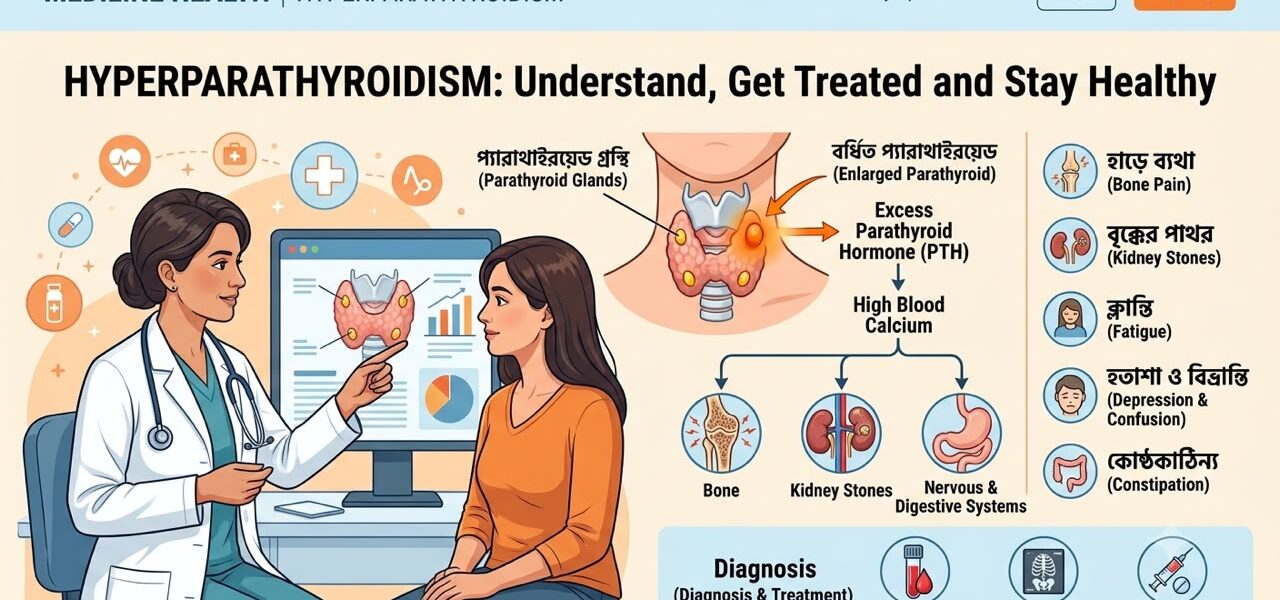
Hyperparathyroidism is a condition in which one or more of the parathyroid glands produce too much parathyroid hormone (PTH). The four small parathyroid glands are located behind the thyroid gland in the neck and help regulate calcium, phosphorus, and vitamin D levels in the body.
Excess production of PTH causes calcium levels in the blood to rise, which can weaken bones, increase the risk of kidney stones, and affect the heart, kidneys, muscles, and nervous system. Early diagnosis and appropriate treatment can help prevent serious complications and improve quality of life.
Symptoms
Hyperparathyroidism may not cause noticeable symptoms in its early stages. When symptoms do occur, they may include:
- Fatigue and weakness
- Bone pain
- Muscle weakness
- Frequent urination
- Excessive thirst
- Kidney stones
- Abdominal pain
- Nausea or vomiting
- Constipation
- Loss of appetite
- Depression or mood changes
- Memory problems or difficulty concentrating
- Joint pain
- Fragile bones and frequent fractures
Causes
Hyperparathyroidism has several causes.
Primary Hyperparathyroidism
Primary hyperparathyroidism occurs when the parathyroid glands themselves become overactive. Common causes include:
- Benign parathyroid adenoma
- Enlargement of two or more parathyroid glands (hyperplasia)
- Rarely, parathyroid cancer
Secondary Hyperparathyroidism
Secondary hyperparathyroidism develops when another condition causes low calcium levels, leading to increased PTH production. Common causes include:
- Chronic kidney disease
- Vitamin D deficiency
- Calcium deficiency
- Intestinal disorders that reduce calcium absorption
Other
Additional contributing factors include:
- Long-term use of certain medications
- Inherited genetic disorders
- Previous radiation therapy to the neck
- Severe magnesium deficiency
Risk Factors
Factors that may increase your risk of hyperparathyroidism include:
- Age over 50 years
- Female sex, especially after menopause
- Family history of parathyroid disorders
- Chronic kidney disease
- Vitamin D deficiency
- Long-term lithium therapy
- Previous neck radiation
- Low dietary calcium intake
Prevention
Although hyperparathyroidism cannot always be prevented, the following measures may help reduce the risk of complications:
- Maintain adequate calcium and vitamin D intake.
- Stay physically active to strengthen bones.
- Drink plenty of water to reduce the risk of kidney stones.
- Avoid smoking and excessive alcohol consumption.
- Follow a balanced, nutritious diet.
- Monitor kidney function if you have chronic kidney disease.
- Have regular medical checkups if you are at high risk.
- Take medications only as prescribed by your healthcare provider.
Seek medical attention if you experience persistent bone pain, kidney stones, or unexplained fatigue.
List of Hyperparathyroidism medicine: