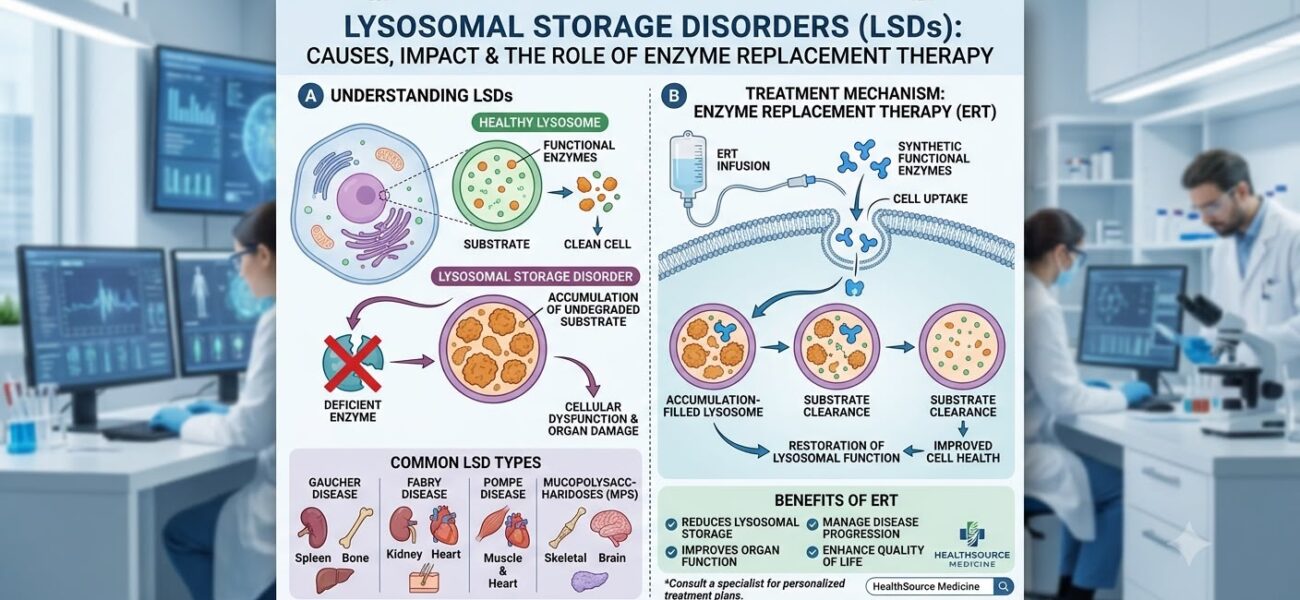
A Lysosomal Storage Disorder (LSD) is a group of rare inherited genetic diseases caused by the deficiency or absence of specific lysosomal enzymes. Lysosomes are small structures inside cells that break down and recycle waste materials. When these enzymes are missing or do not function properly, harmful substances accumulate inside the cells, leading to progressive damage to various organs and tissues.
Lysosomal storage disorders can affect the brain, heart, liver, spleen, bones, muscles, lungs, and nervous system. Early diagnosis and appropriate treatment can help slow disease progression, improve quality of life, and reduce complications.
Symptoms
The symptoms of lysosomal storage disorders vary depending on the specific disease and the organs involved. Common symptoms may include:
- Enlarged liver and spleen
- Developmental delay
- Muscle weakness
- Bone and joint pain
- Difficulty walking
- Seizures
- Vision or hearing loss
- Heart problems
- Breathing difficulties
- Chronic fatigue
- Poor growth in children
- Learning disabilities
Causes
Lysosomal storage disorders have several causes.
Genetic Mutations
Most lysosomal storage disorders are inherited from one or both parents due to mutations in genes responsible for producing lysosomal enzymes. These mutations result in enzyme deficiency and the accumulation of harmful substances inside cells.
Types of Lysosomal Storage Disorders
Common examples include:
- Gaucher disease
- Fabry disease
- Pompe disease
- Niemann-Pick disease
- Tay-Sachs disease
- Hunter syndrome (MPS II)
- Hurler syndrome (MPS I)
- Metachromatic leukodystrophy
- Krabbe disease
- GM1 gangliosidosis
Other
Additional factors include:
- Deficiency of specific lysosomal enzymes
- Inherited metabolic disorders
- Abnormal accumulation of lipids, glycogen, or complex sugars inside cells
Risk Factors
Factors that may increase the risk of lysosomal storage disorders include:
- Family history of lysosomal storage disorders
- Parents carrying disease-causing gene mutations
- Consanguineous (related) marriage
- Previous child affected by a genetic disorder
- Certain ethnic backgrounds with higher carrier frequencies for specific disorders
Prevention
Since lysosomal storage disorders are inherited genetic conditions, they cannot always be prevented. However, the following measures may help reduce the risk or enable early diagnosis:
- Seek genetic counseling before planning a pregnancy if there is a family history of genetic disorders.
- Consider carrier screening for high-risk couples.
- Prenatal genetic testing when appropriate.
- Newborn screening programs where available.
- Early diagnosis and treatment to reduce disease progression.
- Regular follow-up with genetic specialists and multidisciplinary healthcare teams.
The List of Some Lysosomal Storage Disorders Medicines: