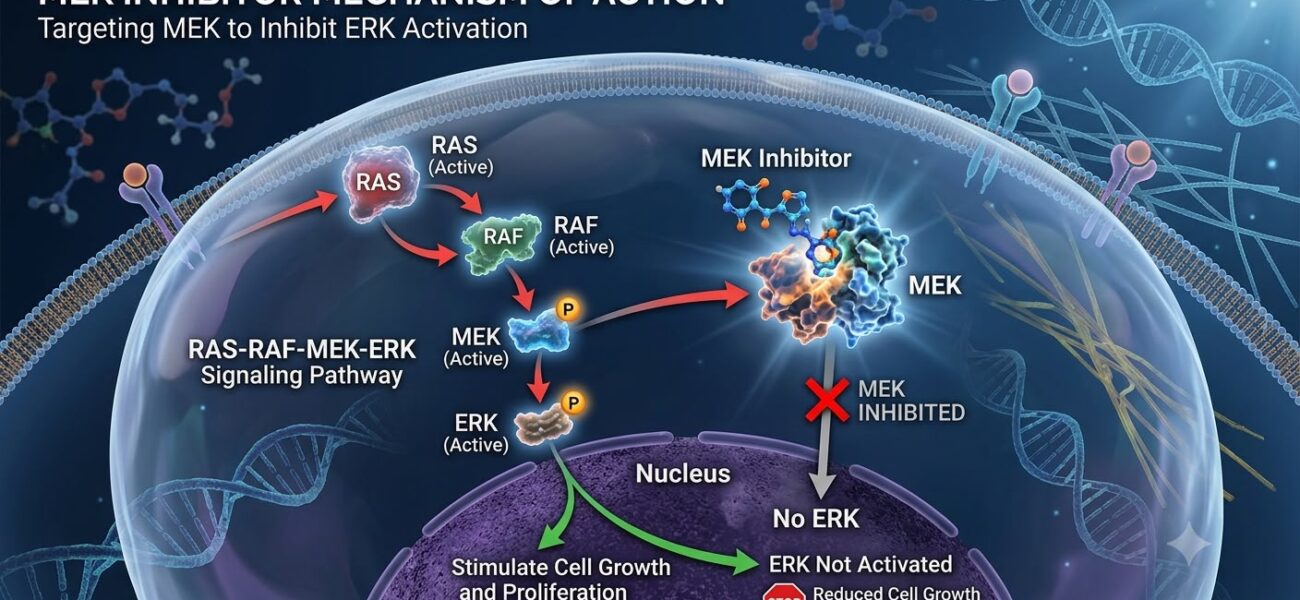
A MEK inhibitor is a type of targeted cancer medicine that blocks the activity of MEK proteins (Mitogen-Activated Protein Kinase Kinase 1 and 2), which are part of the MAPK/ERK signaling pathway. This pathway helps control cell growth, division, and survival. In some cancers, mutations cause this pathway to become overactive, allowing cancer cells to grow uncontrollably.
MEK inhibitors slow or stop the growth of cancer cells by blocking these signals. They are commonly used alone or in combination with BRAF inhibitors to treat cancers with specific genetic mutations, particularly BRAF-mutated melanoma and several other solid tumors.
Symptoms
MEK inhibitors are used to treat cancer rather than symptoms. However, cancers treated with MEK inhibitors may present with symptoms such as:
- Persistent or unexplained pain
- Lump or swelling in different parts of the body
- Unexplained weight loss
- Fatigue
- Persistent cough or shortness of breath
- Changes in skin lesions or moles
- Headaches or neurological symptoms
- Vision changes
- Loss of appetite
Causes
MEK inhibitors are prescribed for cancers caused by abnormal activation of the MAPK/ERK pathway.
Genetic Mutations
Certain gene mutations lead to excessive cell growth. These include:
- BRAF mutations
- KRAS mutations
- NRAS mutations
- NF1 mutations
- MAP2K (MEK) mutations
Types of Cancer
MEK inhibitors may be used to treat:
- Melanoma
- Non-small cell lung cancer (NSCLC)
- Low-grade glioma
- Thyroid cancer
- Colorectal cancer
- Ovarian cancer
- Neurofibromatosis Type 1 (NF1)-associated plexiform neurofibromas
- Other advanced or metastatic solid tumors with specific genetic alterations
Other
Additional situations where MEK inhibitors may be considered include:
- Advanced or metastatic cancers
- Cancers that have spread to other organs
- Tumors resistant to previous treatments
- Combination targeted therapy with BRAF inhibitors
Risk Factors
Factors that may increase the likelihood of developing cancers treated with MEK inhibitors include:
- Inherited genetic mutations
- Family history of cancer
- Smoking
- Excessive sun exposure (melanoma)
- Older age
- Obesity
- Exposure to radiation
- Certain environmental carcinogens
- Previous history of cancer
Prevention
Although not all cancers can be prevented, the following measures may help reduce cancer risk:
- Avoid tobacco use.
- Protect your skin from excessive sunlight by using sunscreen and protective clothing.
- Maintain a healthy body weight.
- Eat a balanced diet rich in fruits and vegetables.
- Exercise regularly.
- Limit alcohol consumption.
- Attend routine medical checkups and recommended cancer screenings.
- Seek genetic counseling if you have a strong family history of cancer.
- Follow your healthcare provider’s recommendations for cancer prevention and early detection.
The List of Some MEK Inhibitor Medicines